呵呵
B'desh & India complement, not compete in garment sector export: BGMEA_我的网站

A | By Mir Afroz Zaman
Dhaka, Oct 16 (UNI) Bangladesh and India do not compete with each other in the international market for export in the garment sector but complement each other, said Faruque Hassan, President of the Bangladesh Garment Manufacturers and Exporters Association (BGMEA).
Addressing media in Dhaka on Sunday, to announce the holding of the first ever branding event for apparel sector named ‘Made in Bangladesh Week’ between November 12-18, Faruque Hassan said exports from Bangladesh to other countries also boosts export from India as many of the inputs are sourced from India.
Faruque Hassan said the export of Ready Made Garments (RMG) showed almost 99 percent growth in the first two months of the current financial year in July and August. He said the RMG sector export to India is likely to cross USD 1 billion in the current financial year compared to USD 764 million last year. The BGMEA President said it is a win-win situation for both the countries as they cooperate in design development and value addition. He announced that BGMEA will soon take up events to promote ‘Brand Bangladesh’ for the apparel sector in India.
Faruque Hassan announced that during the ‘Made in Bangladesh Week’ next month, the apparel Industry of the country will showcase the groundbreaking innovations and compliance and sustainable developments of the RMG sector in the world market. The week-long event will showcase 17 physical events comprising summits, expositions, Photo-exhibition, conferences, fashion innovation among other events. The event is planned to be inaugurated by Prime Minister Sheikh Hasina on November 13.
Outlining the challenges for the RMG sector post 2026 when Bangladesh graduates from the LDC status, Faruque Hassan said it has initiated dialogues with major buyers like the European Union, Australia, UK and others to continue the preferential treatment for Bangladesh RMG products beyond 2026. Also, Bangladesh is diversifying its export basket into emerging markets whose share in total RMG sector export has gone up from 6.8 percent in 2009 to over 17 percent in the current financial year.
Bangladesh has also been working to diversify from natural yarns to synthetic yarns and its product basket from basic 5 RMG products which constitutes 82 percent of all its exports to more fashion oriented products. Bangladesh is also exploring the possibility of online sale of RMG products internationally in line with similar other ventures in the world. BGMEA President said Bangladesh is confident to achieve the export goal of USD 100 billion by the year 2030.
The Ready Made Garment export from Bangladesh was USD 42.6 billion in the year 2021-22. The exports from the RMG and textile sector contribute over 87 percent of the total exports from Bangladesh. Close to 10 million families are employed directly or indirectly in the RMG sector out of which 60 per cent are women.
UNI MAZ SY SHK1927。
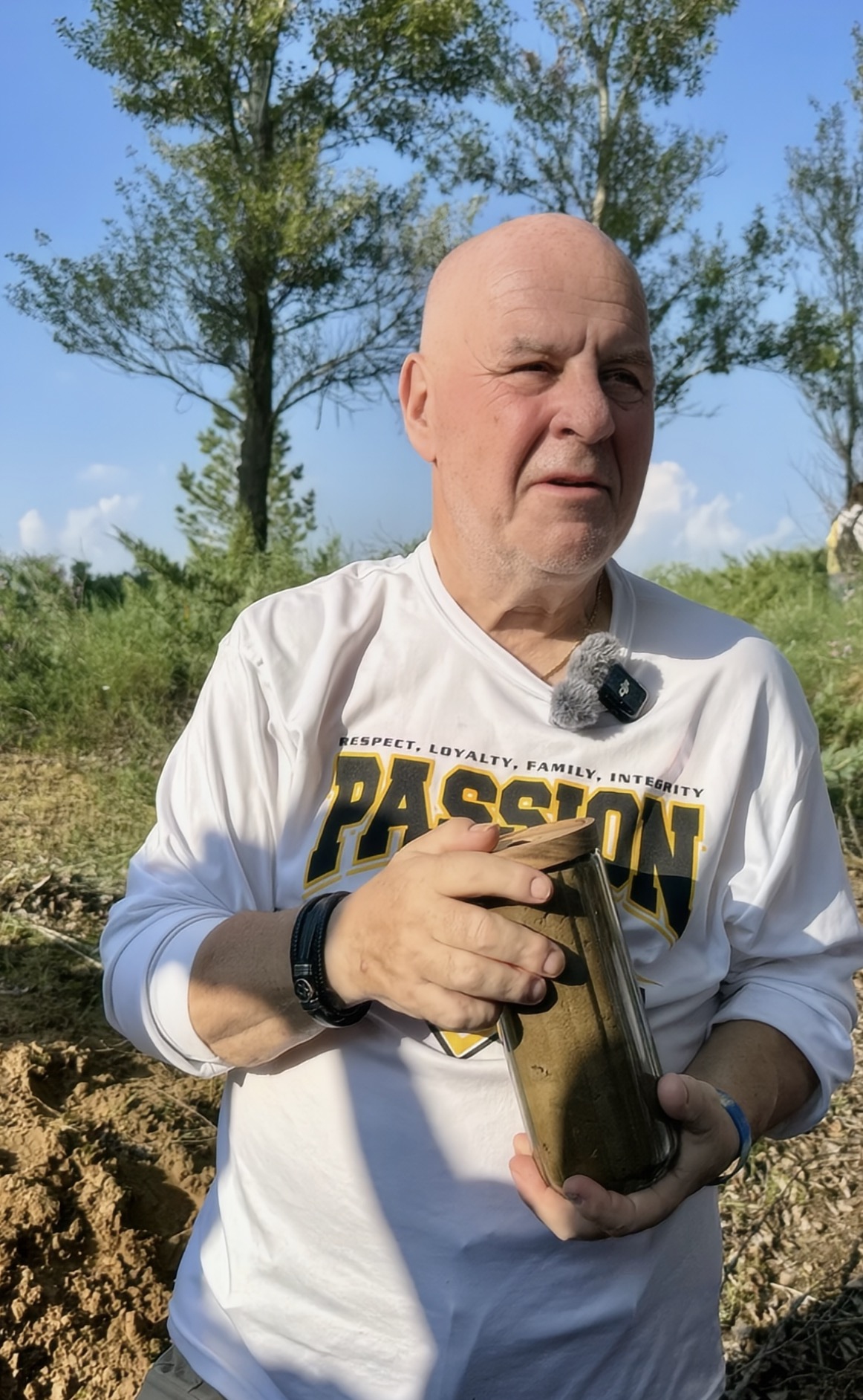
Ronald Sakolsky fills a jar with sand from the Mu Us Desert in Inner Mongolia, planning to bring it back to the US, on August 24, 2026. Photo: Lin Xiaoyi
On Monday afternoon, Ronald Sakolsky, an American teacher, set foot once again on the soil of the Mu Us Desert, in the Uxin Banner of Ordos, North China’s Inner Mongolia Autonomous Region. He first came here in 2000. Back then, the land was little more than drifting sand. Today, it is green with trees – a transformation driven by decades of local effort.
He stood within Sakolsky Forest, a woodland formally named to honor his early donation toward local ecological restoration. There, he carried out a plan he had held long before this trip: filling a jar with sand from the desert to bring home to the US.
More than two decades ago, sand was the one thing this place had in abundance. In 1999, when Sakolsky arrived in China as a participant in a bilateral teacher exchange program, he was moved by the tireless efforts of Chinese desert fighter Yin Yuzhen and her husband to curb desertification in the Mu Us Desert. He raised $5,000 – equivalent in 1999 to three years of income for Yin’s entire family – to fund their local tree-planting initiative.
The young saplings bought with that donation have since matured into more than 50,000 full-grown trees, transforming the once desolate, sandy wasteland into a thriving green landscape.
When Sakolsky met Yin at the airport on Sunday, 26 years after his first visit to Inner Mongolia, he joked that he could not take a tree from the Mu Us Desert, but he could slip some sand into his shoes and carry a piece of the land back with him. Now, he had found exactly the sand he wanted – not just any sand, but from a place where persistence had turned desert into life, and where his own name had become part of that story.
“Promise is a promise,” he said. “Ms. Yin made a promise, and she fulfilled it.”
For Sakolsky, the sand is not just dirt. It is a metaphor, a bridge, a shared ground. He plans to tell his grandchildren what it means. “It’s not just a piece of sand in the jar,” he said. “It’s a jar of love.”
He used the jar of sand to symbolize that America and China share a relationship rooted in the same soil. He shook the jar, holding its two ends as if they were the two countries, and said that it shows we’re all on the same planet.
There is an old American joke, he noted, that if you dig a hole deep enough, you will eventually reach China. “We’re all on the same planet,” he said.
Earlier that day, while visiting Yin’s home, he spoke about the need for Americans and Chinese to see each other as family. “All Americans should understand that Chinese people and Americans can be family,” he said. “We can transcend differences if we focus on our common ground. We all love our countries, and we all value loyalty and respect – these are the shared virtues we hold dear.”
As for the sand he collected, Sakolsky said he would treat it as a treasure, alongside all his other precious keepsakes from China. He expects to display it in his living room – a daily reminder of the forest that carries his name and the people who made it grow.
。
Current article:http://6un.ganweilingmukuai.shop/iyw1k/20260826/7737.html
Published on:22:50:25
 微信
微信 移动端
移动端